Due to current demand please expect up to 1 week to ship after purchase. Thank you!
The Contender Machine Works quench plate press is the easy solution for heat treating your air hardening steels. The press features machined aluminum plates that ride on linear bearings for a smooth and accurate plate quench.
12 and 18-inch-long horizontal plates available along with 12 inch vertically mounted plates. Please inquire about custom plate sizes.
Water jackets running through both plates provide constant cooling to keep the plates a consistent temperature. This is key to a consistent and accurate quench when heat treating a batch of blades and for quickly getting a blade down to room temperature and into the cryo treatment. Without water cooling the plates and blade will remain close to 200 degrees for up to a half an hour or more.
The 18-inch horizontal version is 18 inches wide and 6 inches deep.
The 12-inch horizontal version is 6 inches wide and 12 inches deep making it a compact version that doesn’t take up much bench space.
The 12-inch vertical version uses a large 90-degree bracket so it can easily be mounted to a work bench. This press is perfect for use with a vertical heat-treating oven but also works great with any conventional horizontal oven. The benefit of a vertical press is that the blade us hung down in-between the plates and therefore doesn’t make contact with one plate before the other any sooner than necessary. This further helps to cut down on warp issues. A little more preparation must be made in order to hang the blade though. A good method is to make the foil packet a longer than normal to you have something to hold onto with your tongs. Packets can be suspended with wire by inserting the wire into one fold in the seam of the packet. Just make sure the seam or wire won’t inhibit the plates from making full contact with the blade.
The dual air nozzles can be positioned to direct an air blast in between the clamped plates to help cool the blade faster. A simple ball valve provides easy and fast operation of the air blast. There is no specific PSI but the higher the rate of exchange of air passing between the plates, the faster it will cool.
The cam over clamping system provides fast and heavy clamping of the blade. Speed is very important for a consistent and accurate heat-treating process. Testing has shown the clamp pressure to easily exceed 1000 psi of force.
All plates are now made with sub plates. These sub plates are bolted into each main plate and are meant to be replaced if they become damaged or worn out. This is a more cost-effective solution in the long run if you plan to use them heavily. This latest design revision uses heavier (almost 3/8 thick) subplates and the water runs directly against the plates so there is no air gap for the heat to jump. This makes them even more efficient in cooling and easier to maintain. They come with one set of plates installed. Replacements are sold by the pair.
I believe these are the first quench plates to off the option of having an internal thermocouple installed. One thermocouple can be installed in both plates’ and read from the same digital thermometer. Both thermocouples should be reading almost exactly the same value in a typical application so two of them isn’t totally necessary. However the cost of adding a second thermocouple is relatively small, and it works as a backup and a way to keep an eye on the calibration.
There are a couple benefits of having a thermocouple installed. Firstly, it will allow you to better see how the different types of cooling (aluminum only, air only, water only, air and water together) are performing. Secondly, and more importantly, is that there is no guess work as to when the blade is ready to come out. Ideally a blade will not stay stagnant at any temperature during the heat-treating process other than a soak time at a high temperature. If cryo is being used, then the blade should be put in as soon as it is down to room temperature and then it should be brought up to tempering temperature as soon as the lowest desired temperature has been reached. The thermocouple takes some of that guess work out. I think most makers will be surprised just how fast a blade cools off in the quench plate press. There is no need to leave it clamped for several minutes, in fact this is a bad practice.
A small, submersible pond pump is used to pump water or antifreeze through the plates. Sold here.
Quick connect fittings for use with 1/2-inch hose is included. The same pump system used on our magnetic heatsinks can be used with these plates by simply unplugging the inlet hose from the heatsink and plugging it into the quench plate press.
8 feet of both inlet and outlet hose is included.
Some tips:
Do a dry run before you put the blade in the oven. Make sure you have your safety glasses, gloves, tongs, and quench plate press ready to run. Make sure the press is moving smoothly, the water is flowing and your air blast is ready.
Try to place the blade as close to the center of the press as possible. The press rides on strong guide pins and linear bearings so it will stay very flat, but it is best practice to get the blade centered up in the plates. However, don’t spend a lot of time bumping the blade around trying to get it perfectly centered when you put it in. You want to get it clamped as quickly as possible.
Quenching a blade shouldn’t be a hectic, scattered task. It should be a highly efficient, fast and controlled task. Practice with a cold blade will only make it better.
Due to current demand please expect up to 1 week to ship after purchase. Thank you!
The Contender Machine Works quench plate press is the easy solution for heat treating your air hardening steels. The press features machined aluminum plates that ride on linear bearings for a smooth and accurate plate quench.
12 and 18-inch-long horizontal plates available along with 12 inch vertically mounted plates. Please inquire about custom plate sizes.
Water jackets running through both plates provide constant cooling to keep the plates a consistent temperature. This is key to a consistent and accurate quench when heat treating a batch of blades and for quickly getting a blade down to room temperature and into the cryo treatment. Without water cooling the plates and blade will remain close to 200 degrees for up to a half an hour or more.
The 18-inch horizontal version is 18 inches wide and 6 inches deep.
The 12-inch horizontal version is 6 inches wide and 12 inches deep making it a compact version that doesn’t take up much bench space.
The 12-inch vertical version uses a large 90-degree bracket so it can easily be mounted to a work bench. This press is perfect for use with a vertical heat-treating oven but also works great with any conventional horizontal oven. The benefit of a vertical press is that the blade us hung down in-between the plates and therefore doesn’t make contact with one plate before the other any sooner than necessary. This further helps to cut down on warp issues. A little more preparation must be made in order to hang the blade though. A good method is to make the foil packet a longer than normal to you have something to hold onto with your tongs. Packets can be suspended with wire by inserting the wire into one fold in the seam of the packet. Just make sure the seam or wire won’t inhibit the plates from making full contact with the blade.
The dual air nozzles can be positioned to direct an air blast in between the clamped plates to help cool the blade faster. A simple ball valve provides easy and fast operation of the air blast. There is no specific PSI but the higher the rate of exchange of air passing between the plates, the faster it will cool.
The cam over clamping system provides fast and heavy clamping of the blade. Speed is very important for a consistent and accurate heat-treating process. Testing has shown the clamp pressure to easily exceed 1000 psi of force.
All plates are now made with sub plates. These sub plates are bolted into each main plate and are meant to be replaced if they become damaged or worn out. This is a more cost-effective solution in the long run if you plan to use them heavily. This latest design revision uses heavier (almost 3/8 thick) subplates and the water runs directly against the plates so there is no air gap for the heat to jump. This makes them even more efficient in cooling and easier to maintain. They come with one set of plates installed. Replacements are sold by the pair.
I believe these are the first quench plates to off the option of having an internal thermocouple installed. One thermocouple can be installed in both plates’ and read from the same digital thermometer. Both thermocouples should be reading almost exactly the same value in a typical application so two of them isn’t totally necessary. However the cost of adding a second thermocouple is relatively small, and it works as a backup and a way to keep an eye on the calibration.
There are a couple benefits of having a thermocouple installed. Firstly, it will allow you to better see how the different types of cooling (aluminum only, air only, water only, air and water together) are performing. Secondly, and more importantly, is that there is no guess work as to when the blade is ready to come out. Ideally a blade will not stay stagnant at any temperature during the heat-treating process other than a soak time at a high temperature. If cryo is being used, then the blade should be put in as soon as it is down to room temperature and then it should be brought up to tempering temperature as soon as the lowest desired temperature has been reached. The thermocouple takes some of that guess work out. I think most makers will be surprised just how fast a blade cools off in the quench plate press. There is no need to leave it clamped for several minutes, in fact this is a bad practice.
A small, submersible pond pump is used to pump water or antifreeze through the plates. Sold here.
Quick connect fittings for use with 1/2-inch hose is included. The same pump system used on our magnetic heatsinks can be used with these plates by simply unplugging the inlet hose from the heatsink and plugging it into the quench plate press.
8 feet of both inlet and outlet hose is included.
Some tips:
Do a dry run before you put the blade in the oven. Make sure you have your safety glasses, gloves, tongs, and quench plate press ready to run. Make sure the press is moving smoothly, the water is flowing and your air blast is ready.
Try to place the blade as close to the center of the press as possible. The press rides on strong guide pins and linear bearings so it will stay very flat, but it is best practice to get the blade centered up in the plates. However, don’t spend a lot of time bumping the blade around trying to get it perfectly centered when you put it in. You want to get it clamped as quickly as possible.
Quenching a blade shouldn’t be a hectic, scattered task. It should be a highly efficient, fast and controlled task. Practice with a cold blade will only make it better.
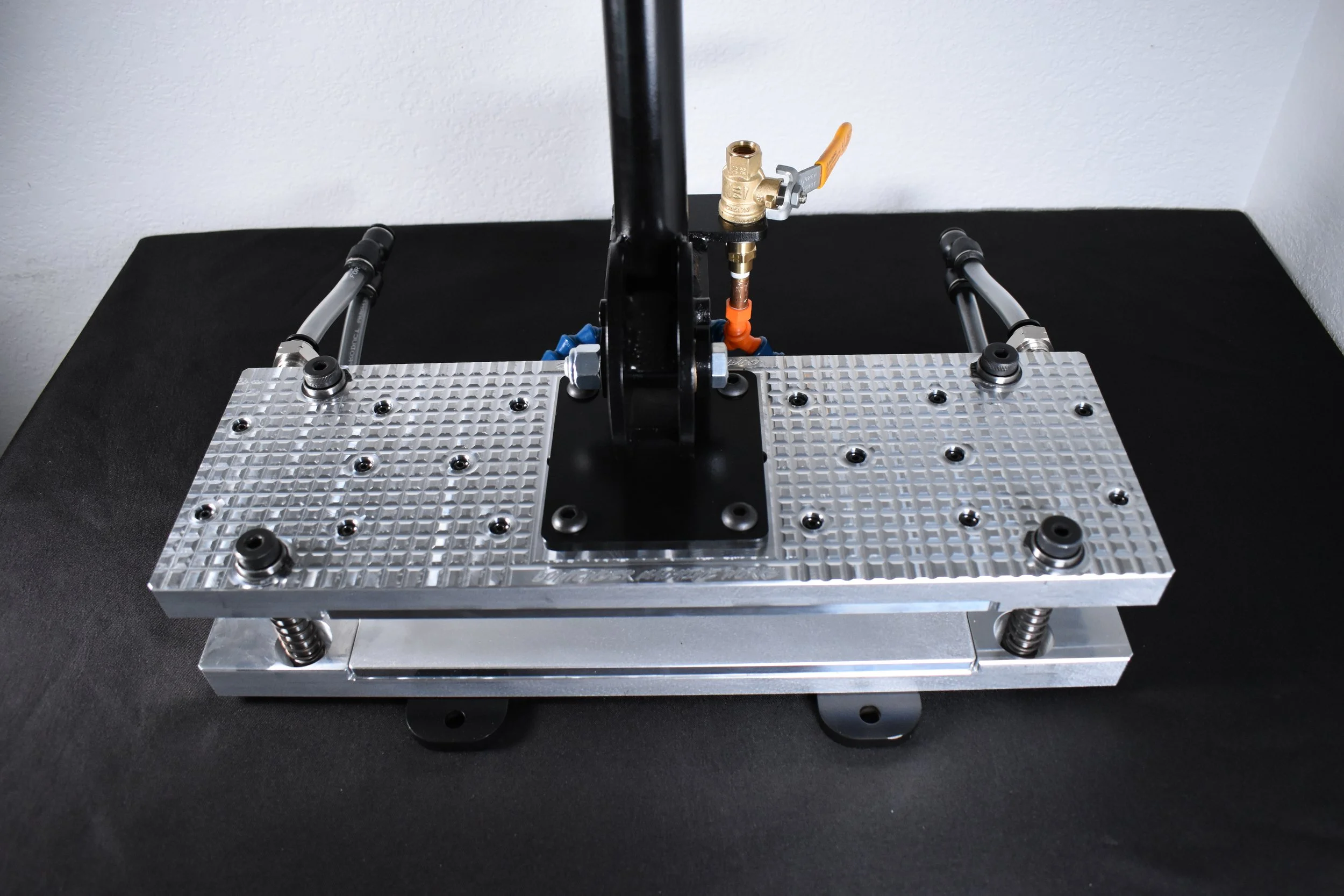 Image 1 of 19
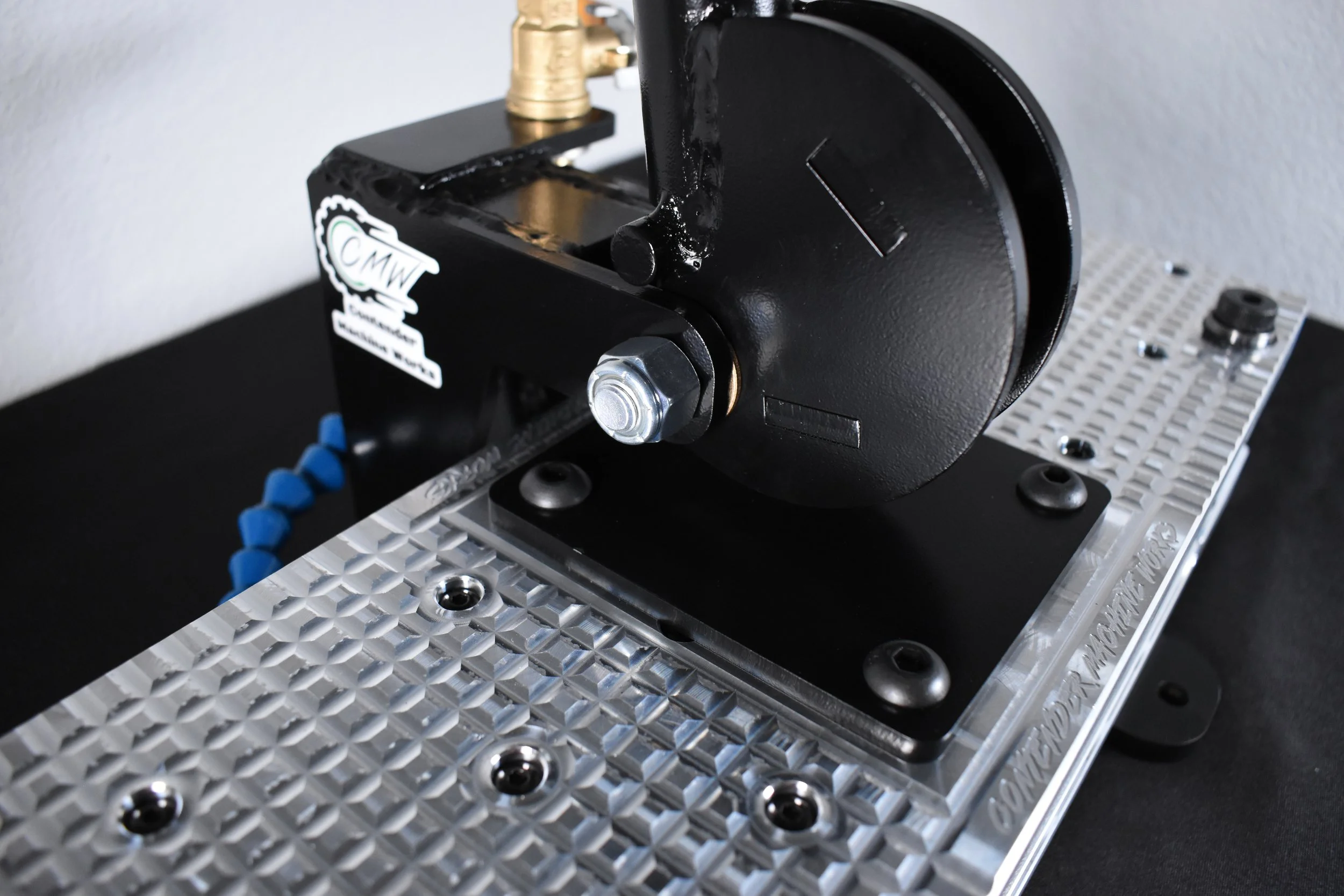 Image 2 of 19
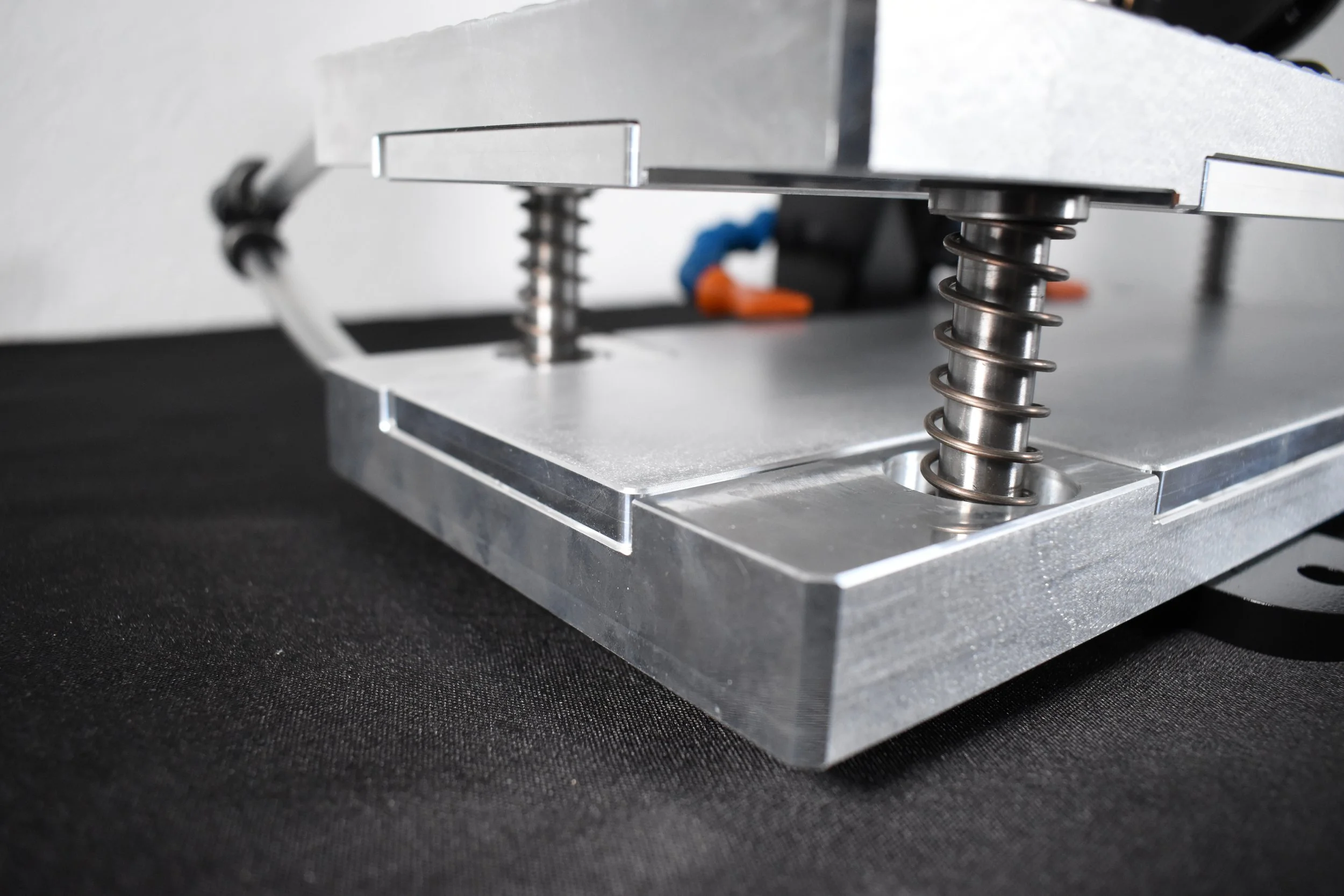 Image 3 of 19
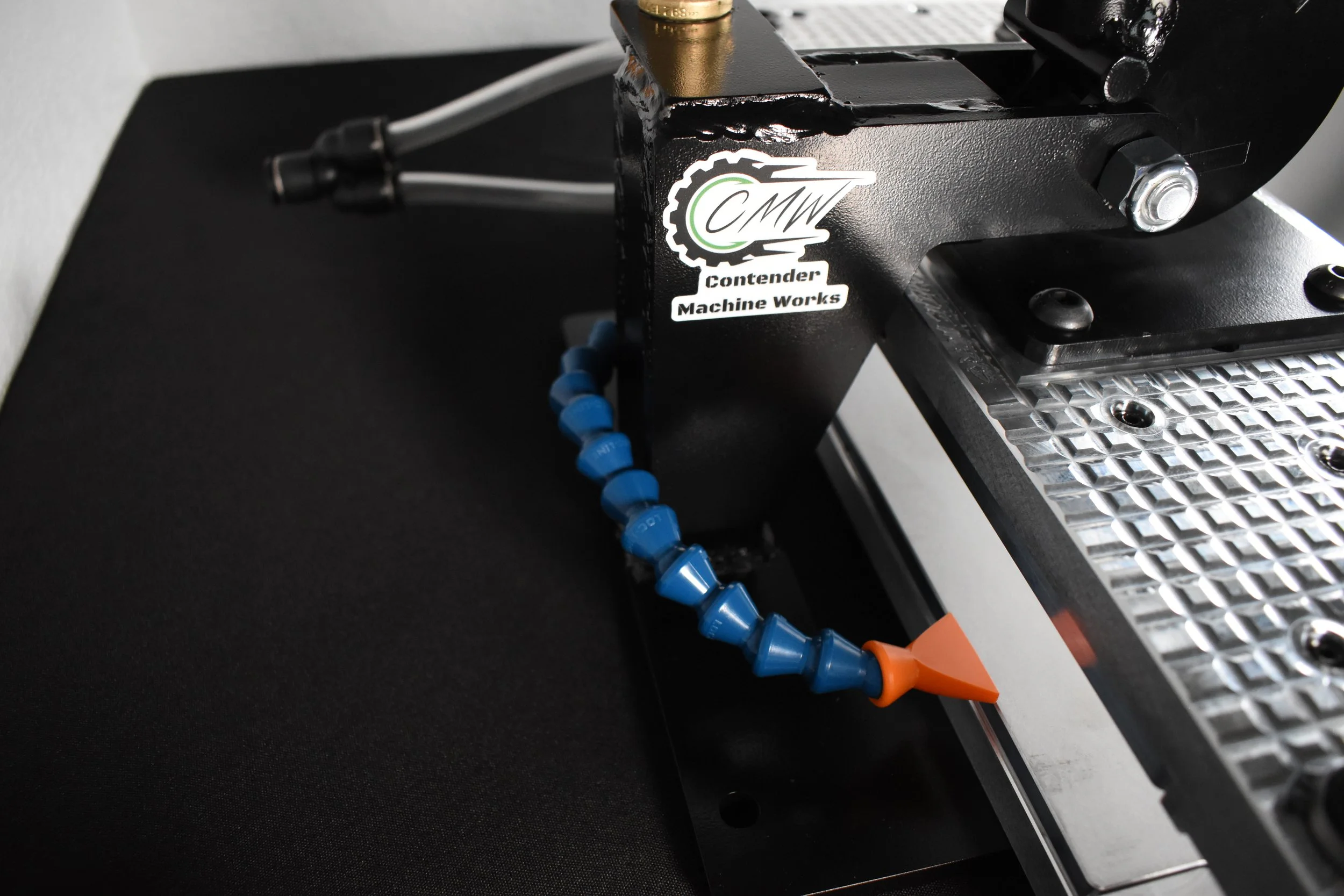 Image 4 of 19
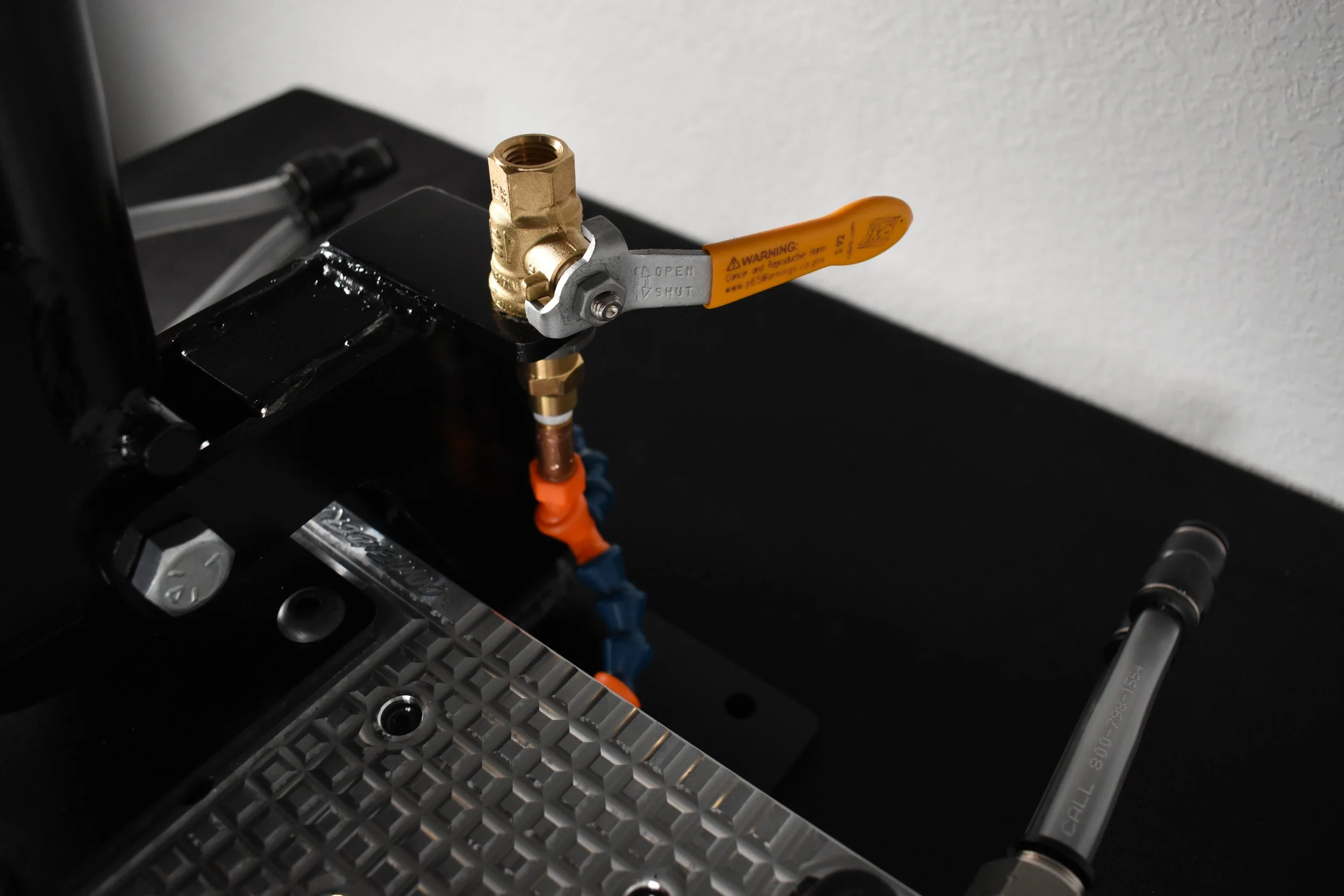 Image 5 of 19
 Image 6 of 19
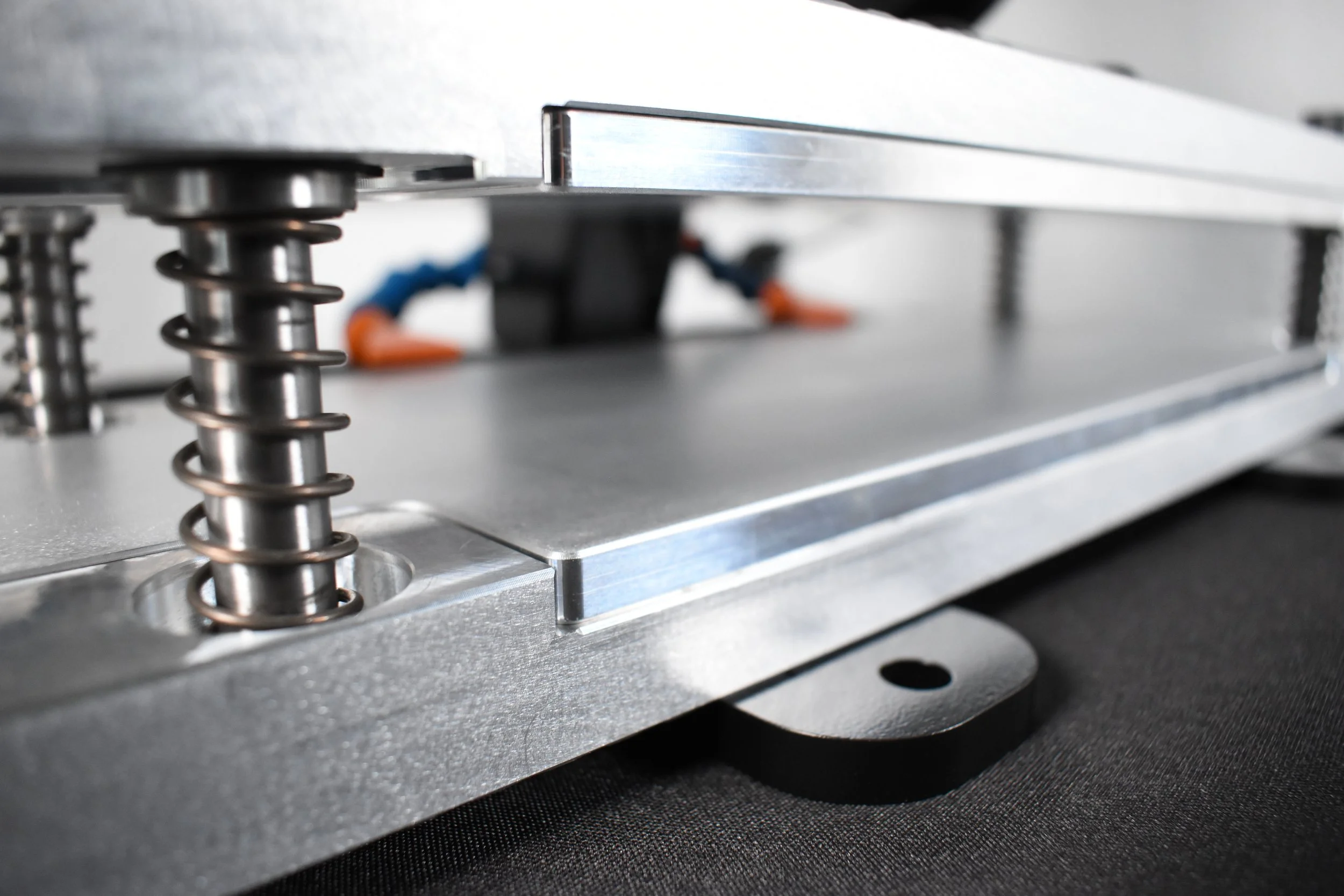 Image 7 of 19
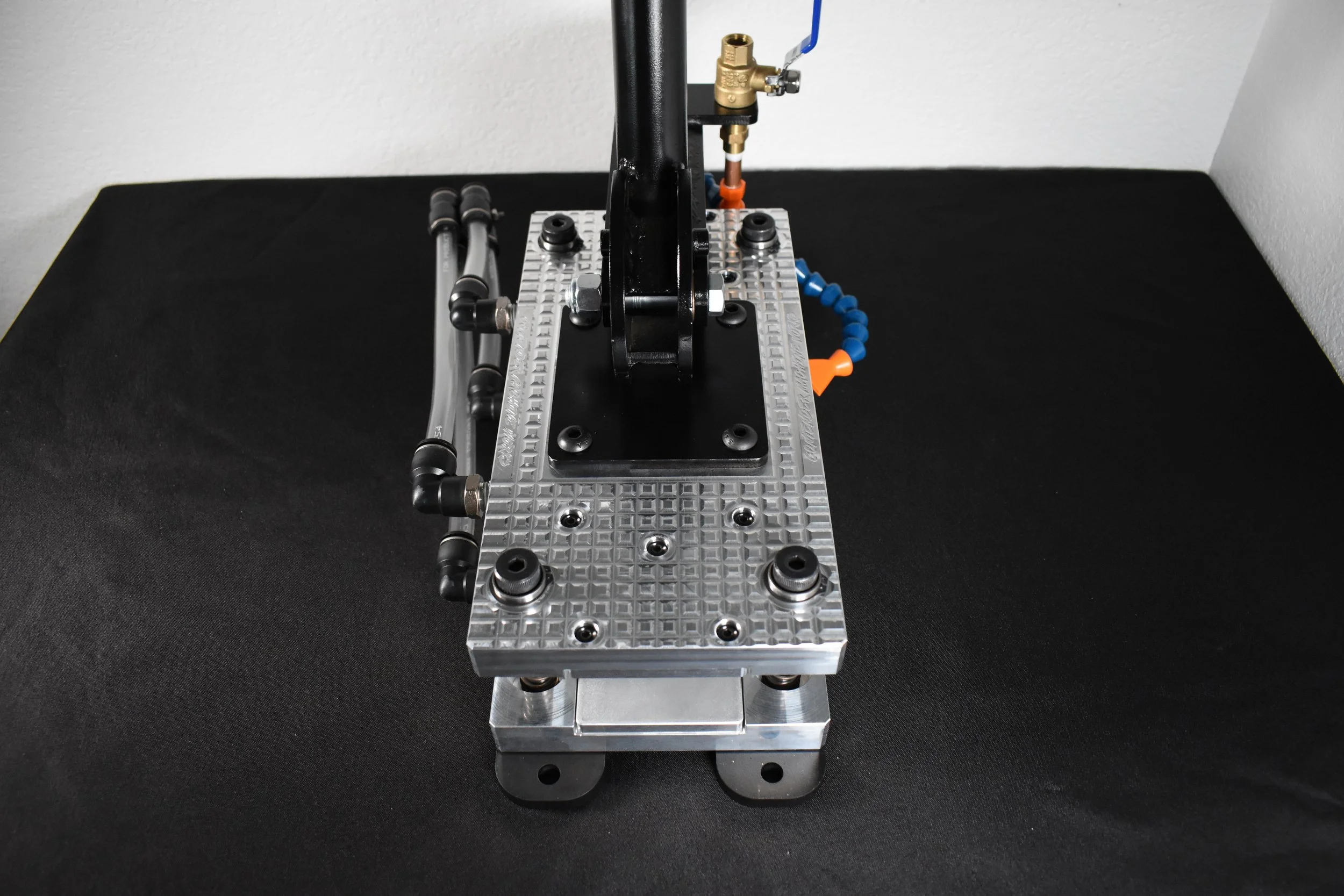 Image 8 of 19
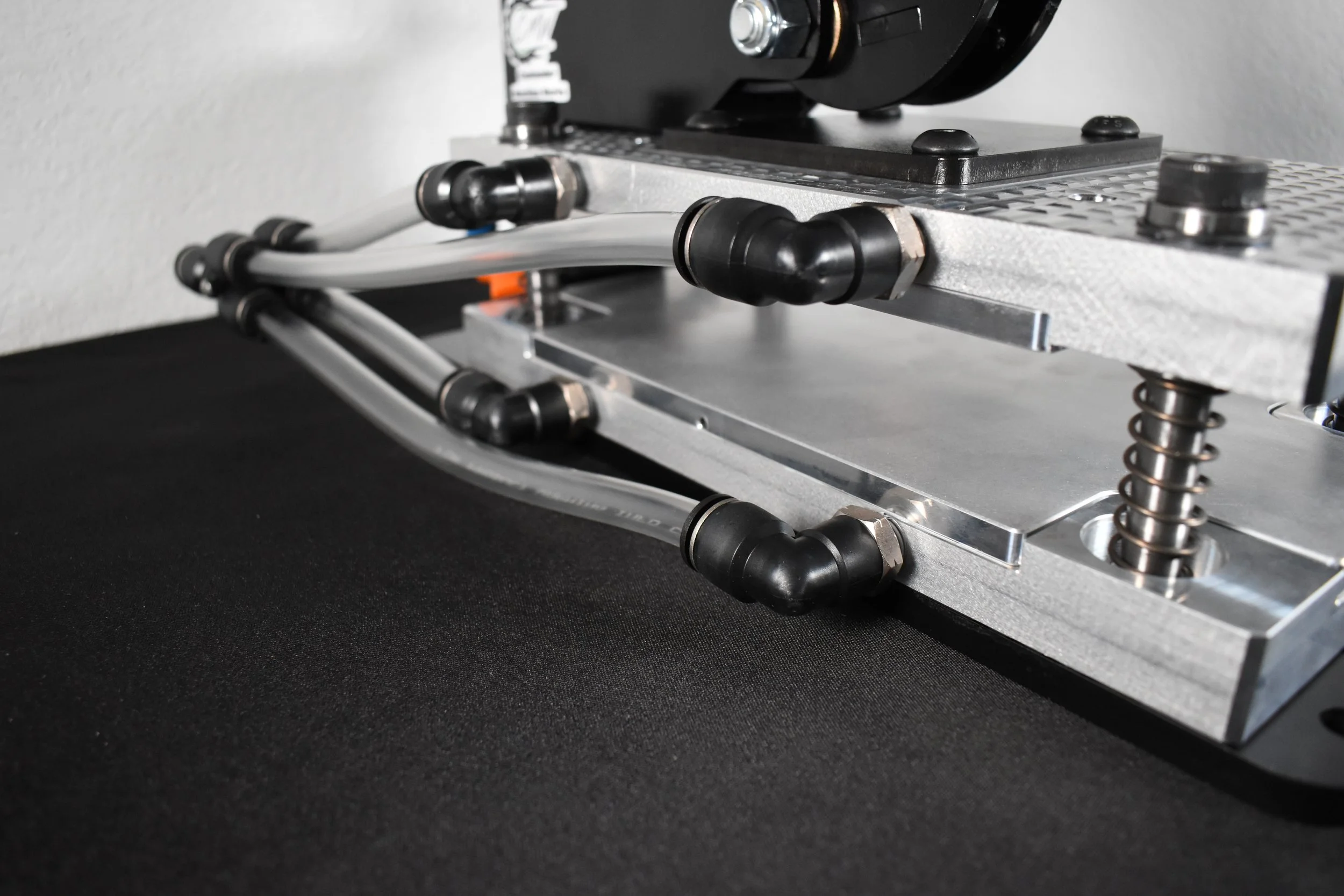 Image 9 of 19
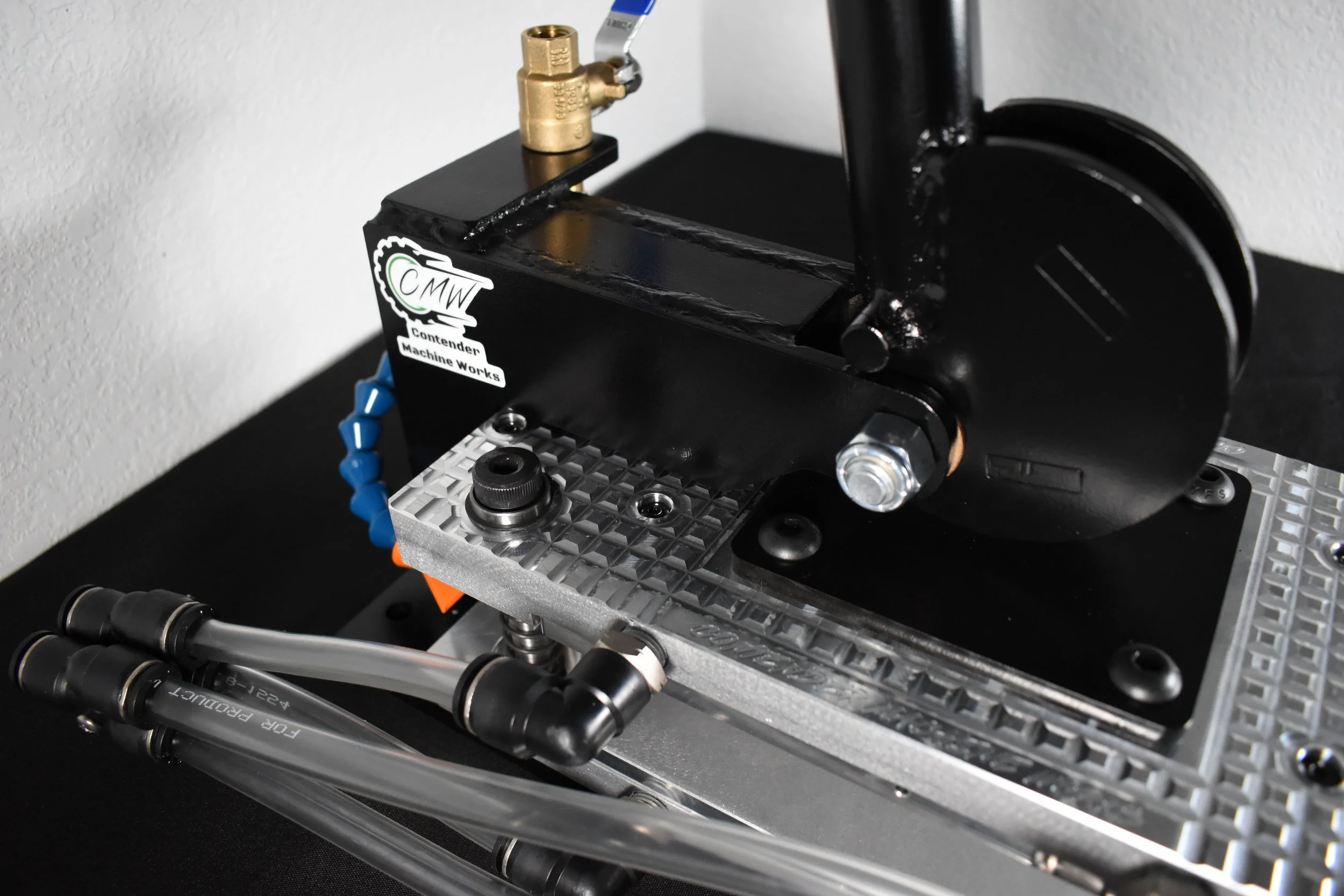 Image 10 of 19
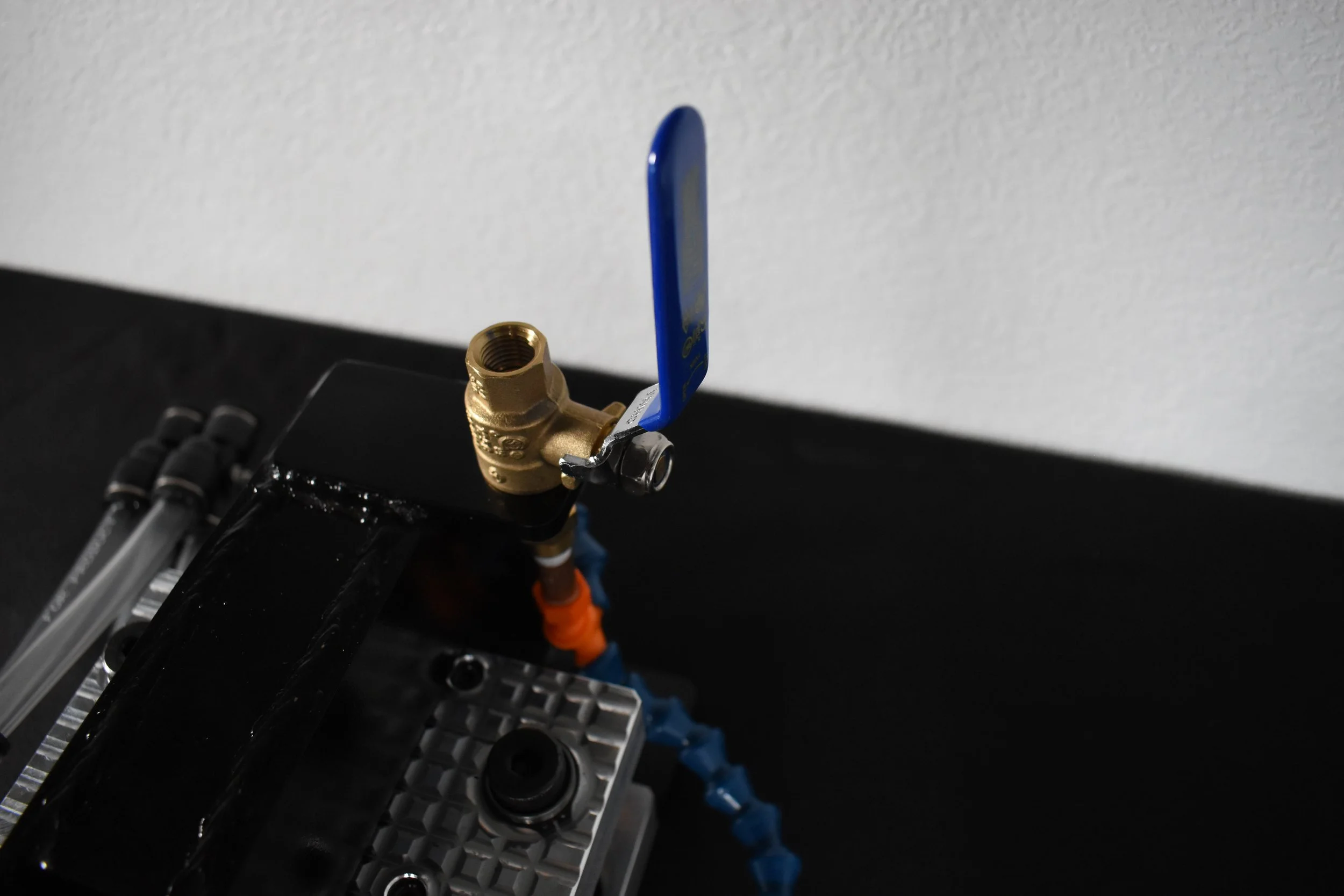 Image 11 of 19
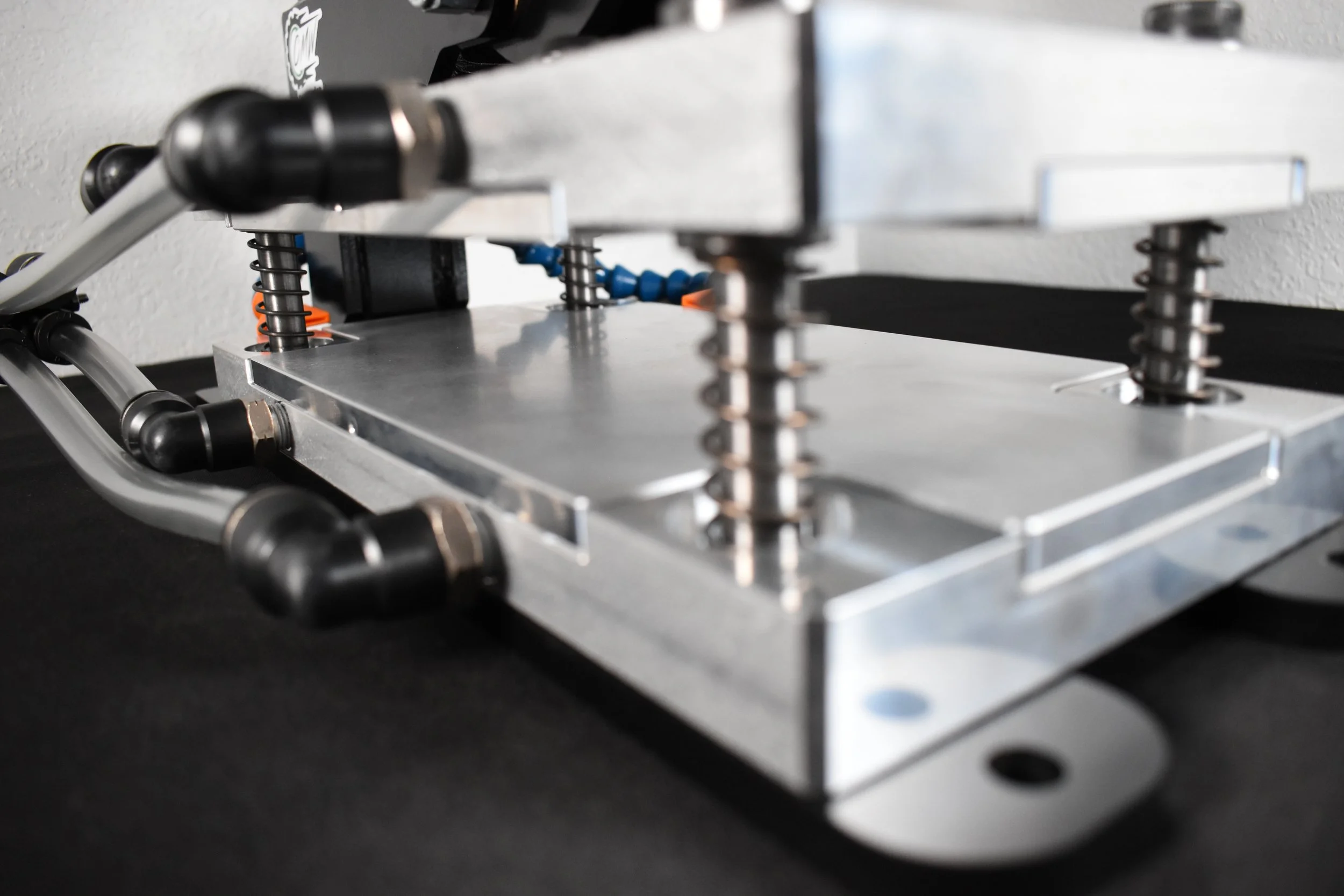 Image 12 of 19
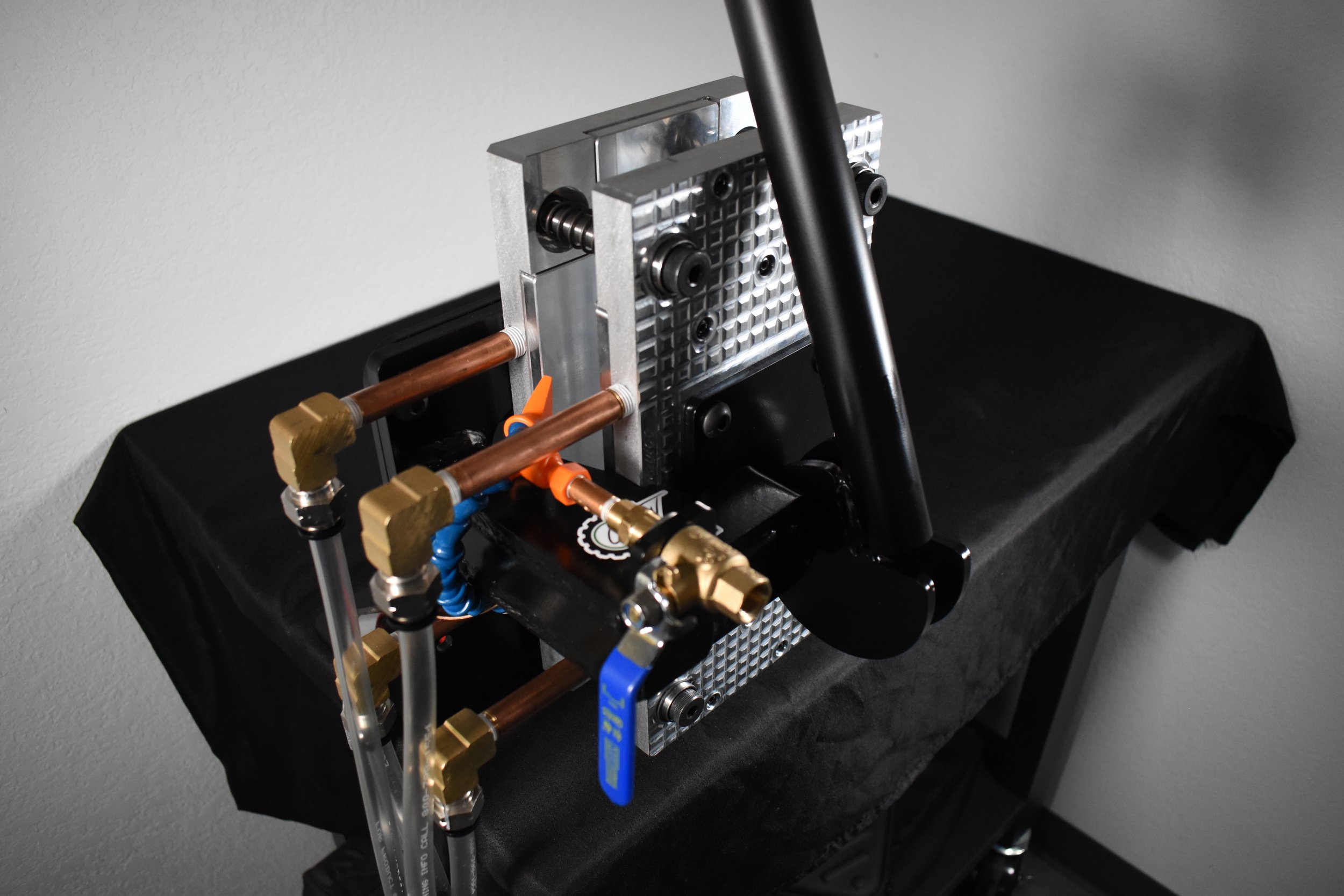 Image 13 of 19
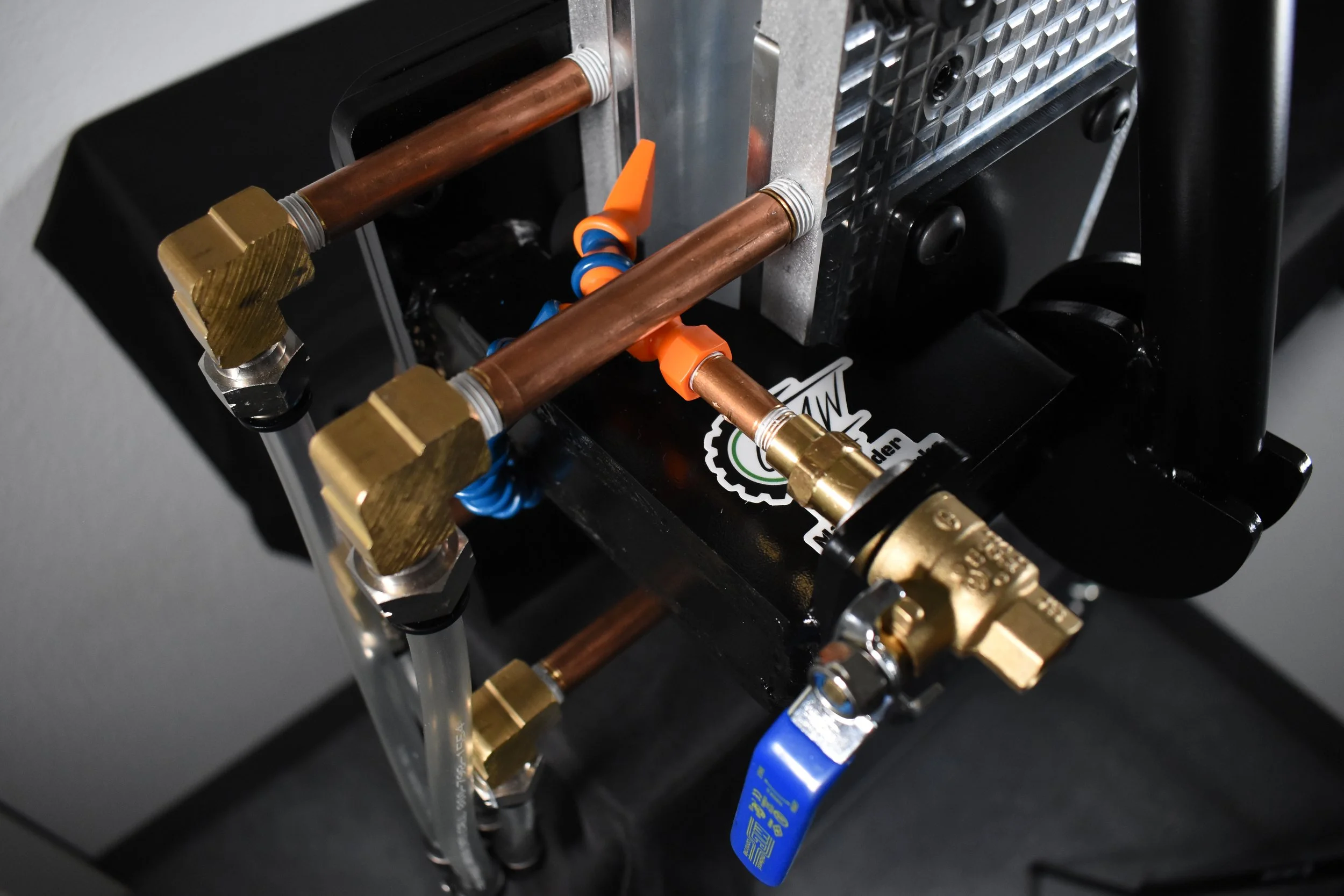 Image 14 of 19
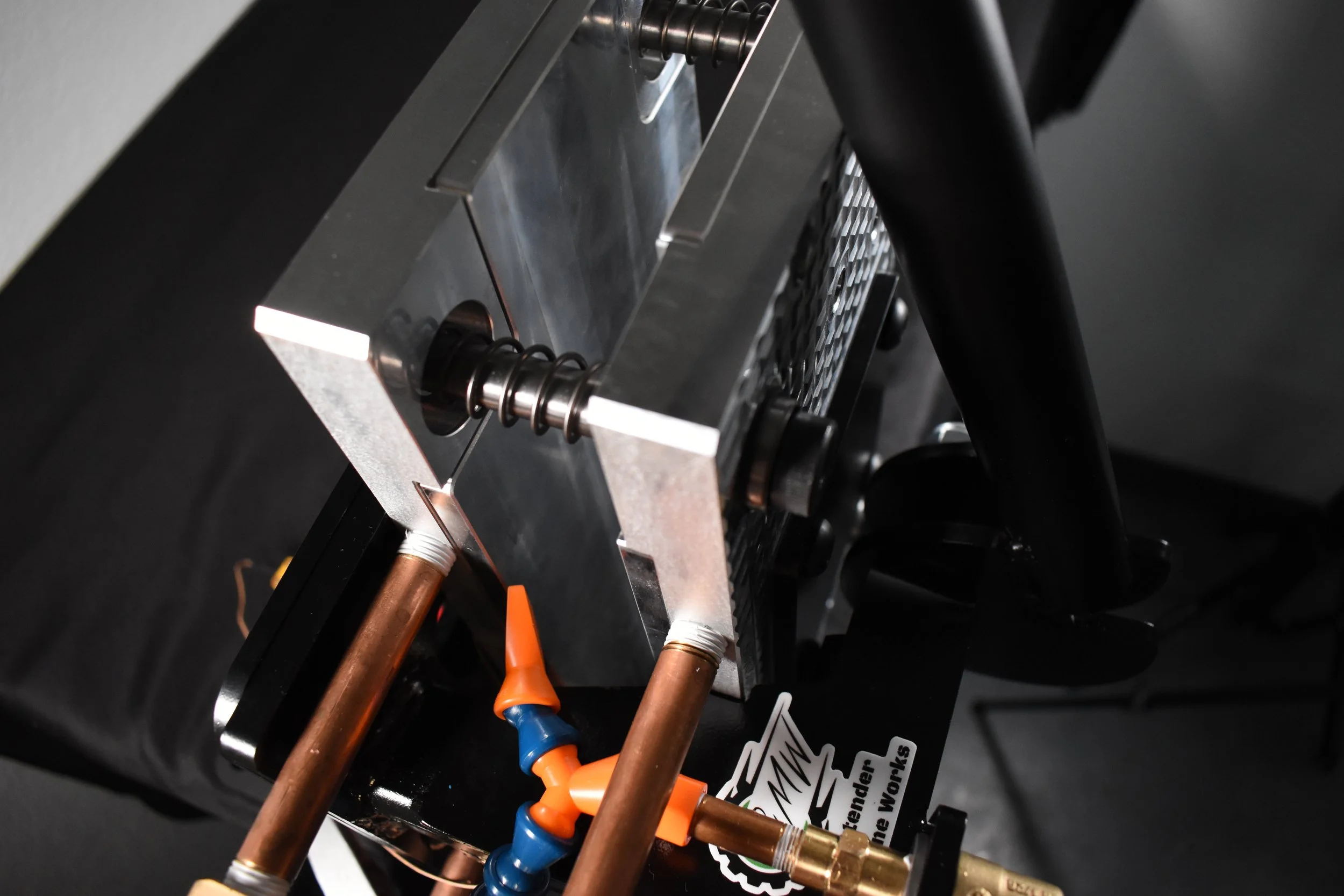 Image 15 of 19
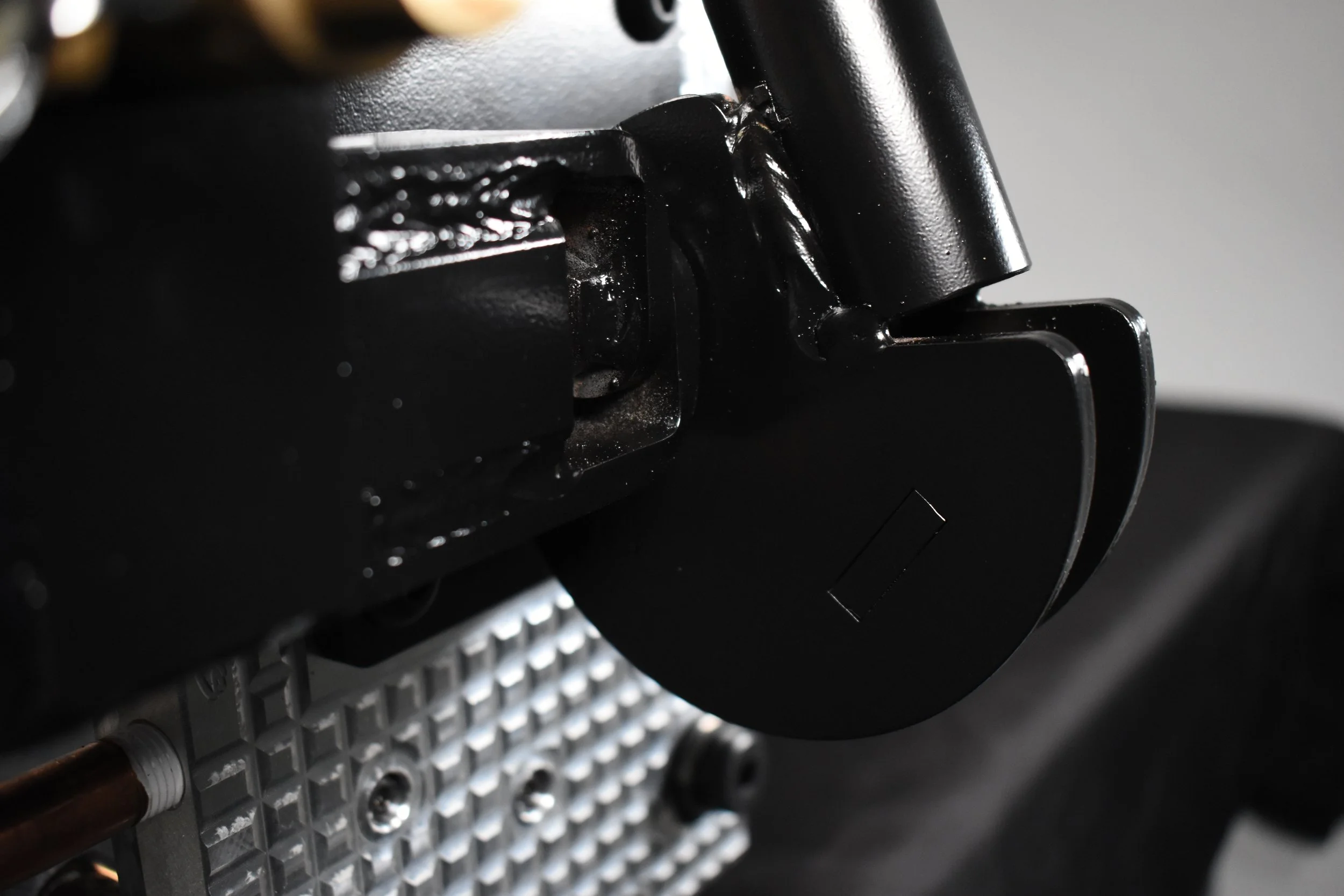 Image 16 of 19
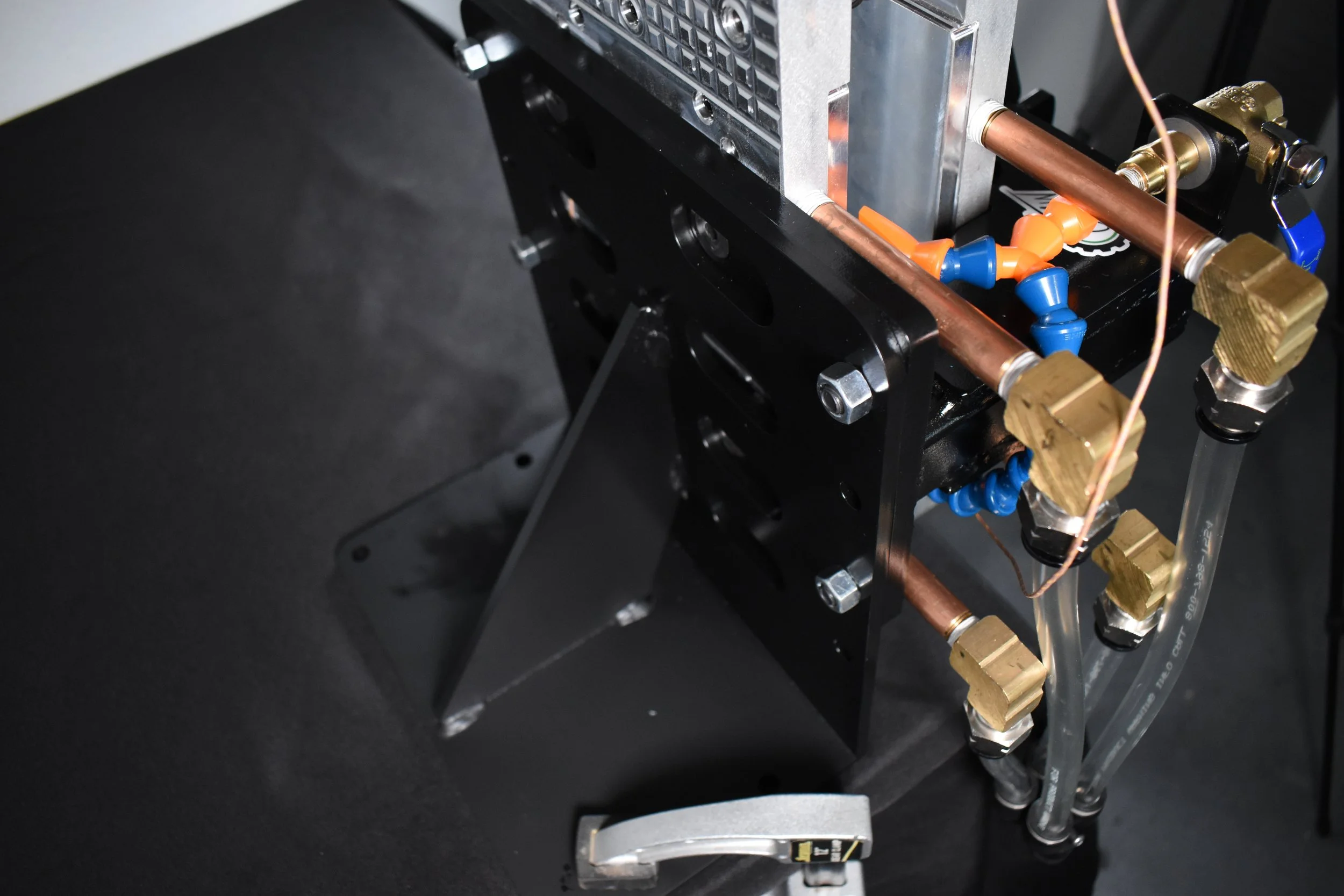 Image 17 of 19
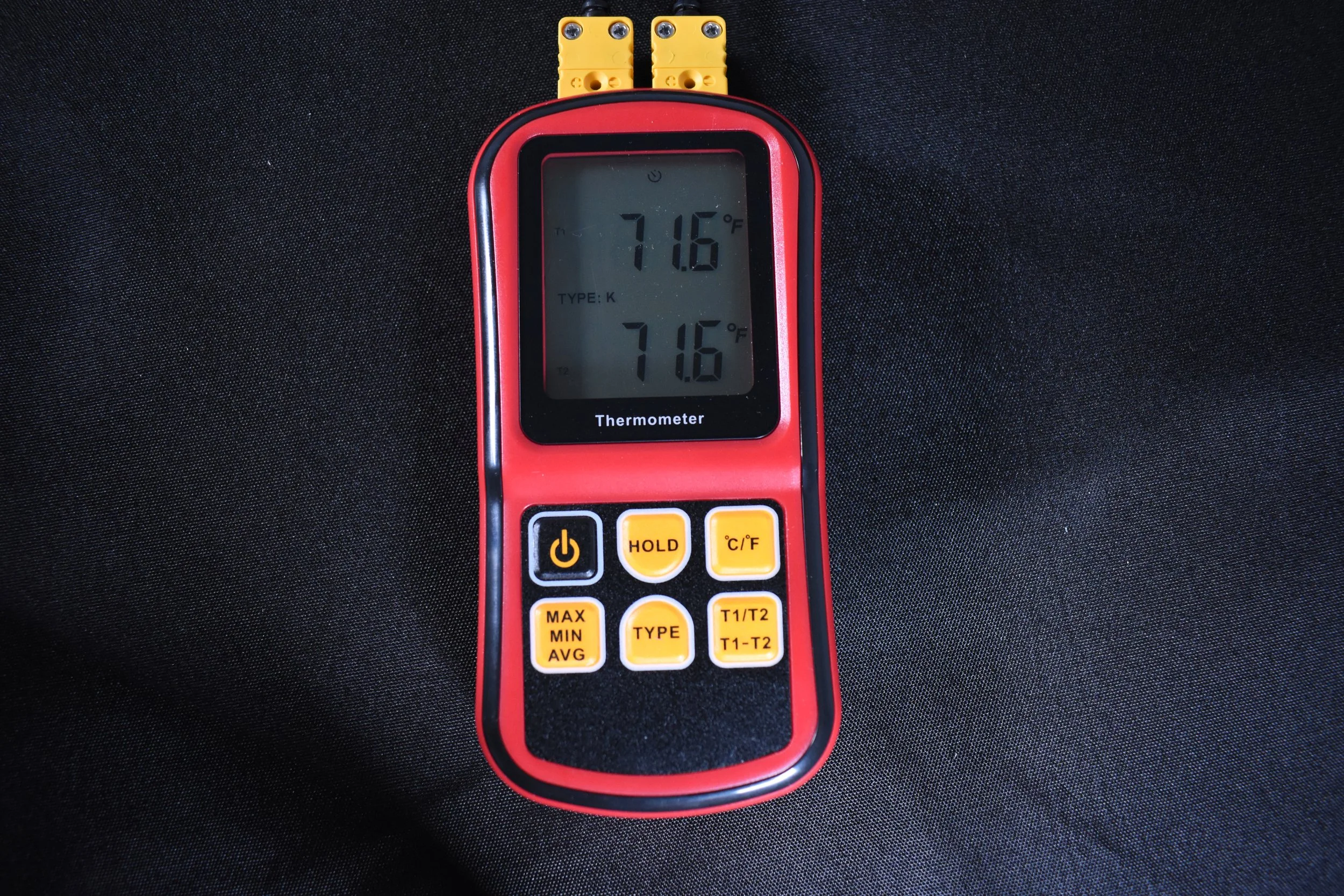 Image 18 of 19
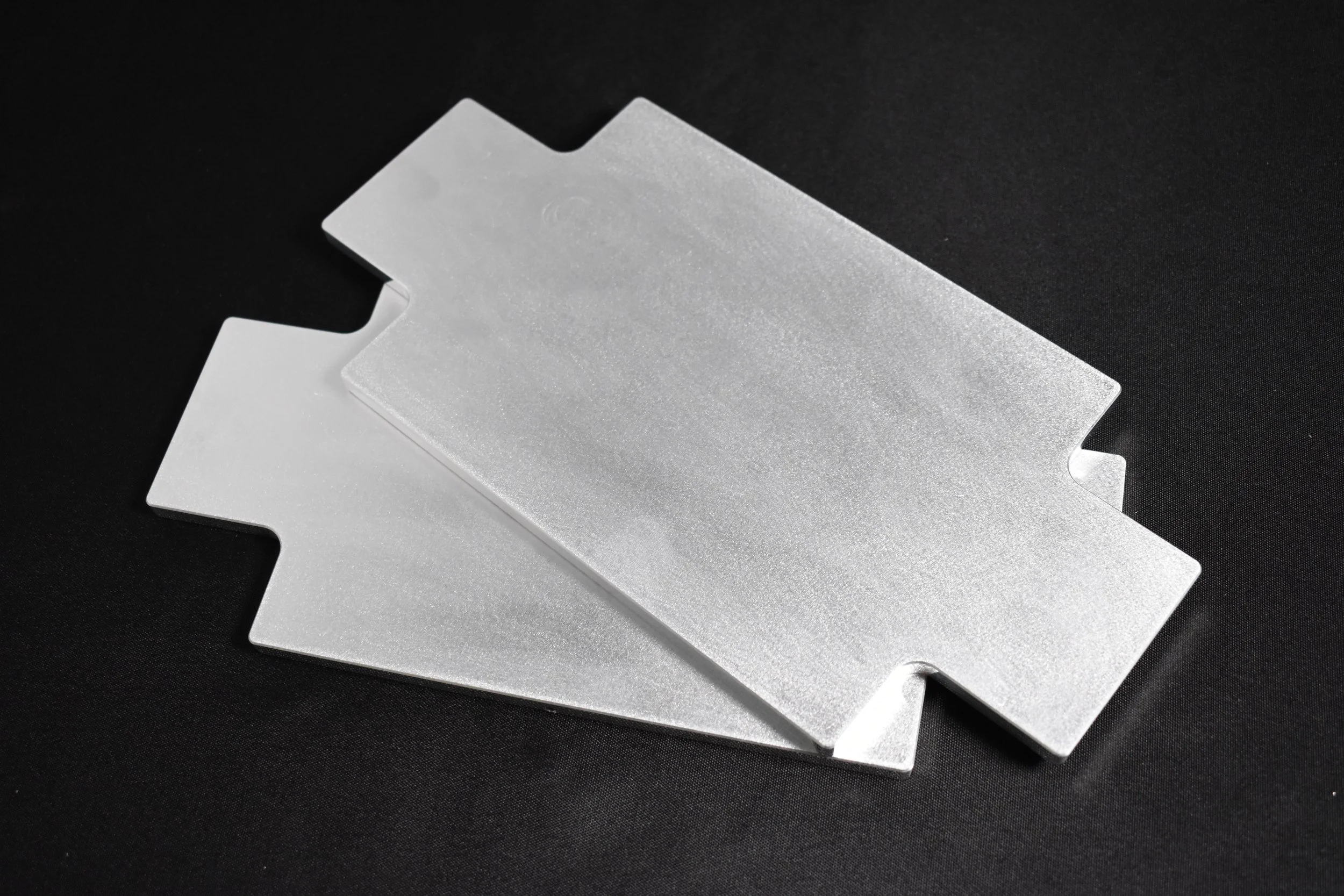 Image 19 of 19